The month of Ramadan arrives each year as an important invitation to discipline the body, purify the soul, renew community bonds and deepen our relationship with Allah (SWT). For many Muslims it is a time of fasting, nightly prayer, Quranic recitation and mutual support. Yet for those among us, including children with intellectual, developmental or any other disabilities, the conventional image of fasting from dawn until dusk or standing simply in congregational tawareeh may not fully apply. That, however, does not mean exclusion, it’s rather the opposite. It means our community has a distinct responsibility to ensure that every child is welcomed into the atmosphere and practices of Ramadan, accommodated in meaningful ways, and affirmed in their spiritual dignity.
A Foundation of Mercy and Accommodation in the Islamic Tradition
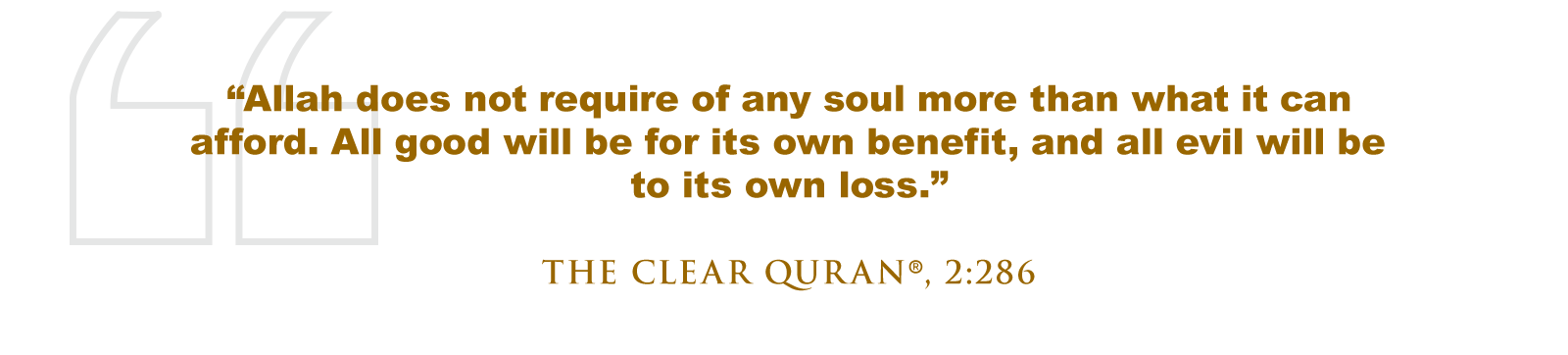
Islamic teachings remind us that Allah (SWT) does not burden a soul beyond what it can bear. Allah (SWT) says in The Quran, “Allah does not require of any soul more than what it can afford. All good will be for its own benefit, and all evil will be to its own loss.” (The Clear Quran®, 2:286)
These verses emphasize that spiritual practice is not meant to become an unbearable hardship, but a path reachable with sincerity and capacity. In other words, where some standard forms of worship may not be feasible, Islam offers alternative ways, and the measure of our devotion lies in our intention and effort, not only in external uniformity.
For children with disabilities, whether intellectual, developmental, emotional or physical, this means that although the pattern of Ramadan may look different, their place in the month is as valid and as precious as any other child’s. The spiritual gates remain open to them. At our school, where we serve children with diverse learning needs, this truth becomes not only theological but deeply practical, and that is, inclusion is not optional, it is essential.
Why Inclusion During Ramadan Matters
- Spiritual belonging: For a child with special needs, seeing peers engaged in iftar, dhikr, Quran circles or family gatherings but not being invited or accommodated can send a painful message of “not quite belonging.” Whereas being welcomed, even in modified form, affirms their identity as Muslim and as an active member of the community.
- Equitable access to worship and meaning: The month of Ramadan is not simply about fasting, but about drawing closer to Allah (SWT), building empathy, increasing gratitude and renewing our character. Fasting is not limited to abstaining from eating and drinking, it’s all about getting closer to your Creator and relying on Him and what His wishes are. While it may seem easier said than done, Islam gives us multiple opportunities through acts of kindness, reflection, sincere gratitude and prayer to get to that level. Therefore children whose physical or cognitive situation might make traditional fasting impossible still deserve opportunities to engage in meaning-filled practices.
- Community strength and integrity: A community that includes all its members, visible and invisible, able and differently-abled, demonstrates the prophetic model of mercy, justice, and compassion. Unfortunately, many masajid remain inaccessible, physically, communicatively, and emotionally for persons with disabilities. When we welcome children with disabilities into Ramadan-specific activities, we are modelling a fuller Islamic vision.
- Breaking stigma and building empathy: Disability often remains invisible or stigmatized in many Muslim communities. Through inclusive Ramadan programming, children as well as their peers, siblings, teachers and friends learn to value difference, to act for accommodation, to grow in empathy, which in turn enriches the entire community. If Ramadan is all about community building, then we cannot judge and exclude individuals with disabilities.
Practical Pathways for Inclusion at Furqaan Academy for Exceptional Children and Beyond
Here are suggestions that can be implemented within Islamic schools or within households and community settings to make this Ramadan more accessible:
- Adapted instruction and activities: Create simplified Ramadan guides or social stories for children with learning differences that explain fasting, iftar, taraweeh, giving in charity (zakah/sadaqah), and communal needs in accessible language with visuals.
- Alternative participation choices: For children who cannot fast from dawn to dusk, consider:
- Offering a partial fast (abstaining from certain snacks, or skipping late afternoon snacks) if safe and medically approved.
- Engaging in ‘fasting’ of another kind: extra dhikr, reciting short surahs, helping prepare the iftar for others, and charitable acts.
- Celebrating iftar together as a community with inclusive seating, sensory-friendly spaces, and ensuring participation by all present.
- Accessible environments: Ensure the iftar venue or school prayer space is physically accessible (ramps, wide doors, accessible bathrooms, etc). For children with sensory needs, provide a quiet zone. Include communication support if needed (visual schedules, sign language interpretation, simple recitation cues, etc). Also, one must ensure that if there are children with any sort of disabilities that come to the masajid, they should not be looked at with gazes of irritation or inconvenience. Instead, treat them as a child of your community and show them the same respect, love, and nurture that you would give to other children.
- Peer-buddy systems and mentoring: Pair students with and without disabilities during Ramadan activities which can include sharing the iftar table, reading Quran together, helping each other prepare for fasting, and this fosters genuine connection amongst their peers.
- Family and community engagement: Encourage families and community members to reflect on inclusive language. Emphasize the avoidance of pity or “burden” narratives and encourage the question: “How can we make this Ramadan meaningful for EVERY child?” Workshops or parent-education sessions might help explore this.
- Celebrate the diversity of experience: Make room for the message that Ramadan is not one uniform experience. A child may not observe a full fast today, but their spiritual striving, their presence, and their efforts matter deeply.
Why Inclusion During Ramadan Matters for Our Deen and in Our School
At Furqaan Academy for Exceptional Children, we uphold the belief that every child is endowed by Allah (SWT) with unique dignity and capacity for ‘amr and ibadah in their own way.
In the month of Ramadan, we are reminded of the importance of ‘adl, rahmah, and ummah. When we include children with disabilities fully in Ramdhan’s spirituality, we affirm that:
- Our school’s commitment to educational inclusivity reflects not merely legal compliance or benevolence, but a theology of Islam which sees diversity as part of Allah’s (SWT) creation.
- The spiritual life of our children is not secondary, they are not spectators but participants in the month of mercy. The smiles of understanding, the small moments of shared iftar, the whispered “Allahu Akbar” in taraweeh, these count.
- The community is enriched when difference is engaged, not isolated. A child who may find standing in prayer difficult brings a perspective on sincerity, a child student who may not fast in the conventional way invites the community to reflect on the heart of fasting: humility, empathy, and gratitude.
- Ultimately, the Divine sees not only actions, but intentions and efforts. The Prophet (SAW) taught that one’s reward depends on capacity, and that Allah’s (SWT) mercy is activated when we act within our means. Inclusive practice affirms this fundamental principle.
A Call to Action
As we enjoy the blessed days and nights of Ramadan, let us commit as staff, as students, as families, as the FAEC community, to making this Ramadan truly inclusive. Let us ask:
- Have we asked each child, to the extent of their capacity, how they would like to engage in this month?
- Have we created spaces where sensory, cognitive, and physical needs are anticipated and accommodated?
- Have we connected children with disabilities with peer-buddies and mentors so the rhythm of Ramadan becomes communal rather than isolating?
- Have we, as adults and educators, reflected on our own assumptions about what it means “to fast” or “to pray” and allowed space for diverse expressions of devotion?
- Have we communicated clearly to families: “Your child belongs in EVERY part of Ramadan’s spiritual journey, and we are here to support that,” not just in theory, but in practice?
In doing so, we enact a vision of Islam that is alive, compassionate and deeply human. A vision where the month of Ramadan is not simply about what we give up, but about what we open up to Allah (SWT), to one another, and to every unique soul in our midst. May this Ramadan be for our FAEC family a time of spiritual growth, communal solidarity and meaningful inclusion. May we all feel the embrace of Allah’s (SWT) mercy and make space for every child’s heart to say, “I belong.”
Dua
O Allah! Let this Ramadan be a light that reaches every heart in our school, for those who fast and for those who are unable to fast, for those who stand in night prayers, and for those whose bodies or minds cannot.
Our Lord, do not let a single one of our children feel unwelcome in this blessed month. For You are the Creator of all, You know what is within hearts, and You witness the silent efforts no one else sees.
O Allah! Choose for each child a path to You where some may fast, others may glorify You with tasbih, and others may offer their love in serving those around them.
O Allah! Let us see worship in affection, nearness in humility, and Your mercy in every detail of this sacred month. O Allah! Let our children with special needs be among those closest to You, grant them Your pleasure, a light to guide their steps, and companions who love and celebrate them.
O Allah! Do not make Ramadan only for the strong and capable, but a season for every seeker of Your nearness, so that the one who cannot fast with the body may fast with the tongue, the one who cannot read The Quran may listen and love it, and the one who cannot stand in taraweeh make dua for those who do.
Ameen!